
For Students in Rural North Carolina, Cleaner Air Starts on the Ride to School
Across the US, millions of students begin and end their days on a yellow school bus. It’s a routine many of us still remember — the early morning pickup, the rumble of the engine, the vinyl bench seats, the smell of diesel drifting through open windows.
In rural North Carolina, that familiar ride is being reimagined — no longer defined by polluting fumes and engine noise, but by cleaner air and a healthier start to the school day.
Roanoke Economic Development — the nonprofit arm of member-owned electric utility provider Roanoke Cooperative — is partnering with local school districts to bring electric school buses to communities with the most to gain from cleaner transportation. Students who live in rural areas tend to have longer commutes, traveling nearly twice as far as urban students to get to school. Many rural students spend an hour or more on a school bus each day, breathing in diesel exhaust and other harmful pollutants that tend to concentrate inside school buses.
With support from Hive Fund, Roanoke recently helped Bertie County Schools, a district in the rural northeastern part of the state, add their first electric bus to a fleet of roughly 44 vehicles, with four more expected to arrive soon. What began as a pilot project is already reshaping daily life for students, drivers, and families.
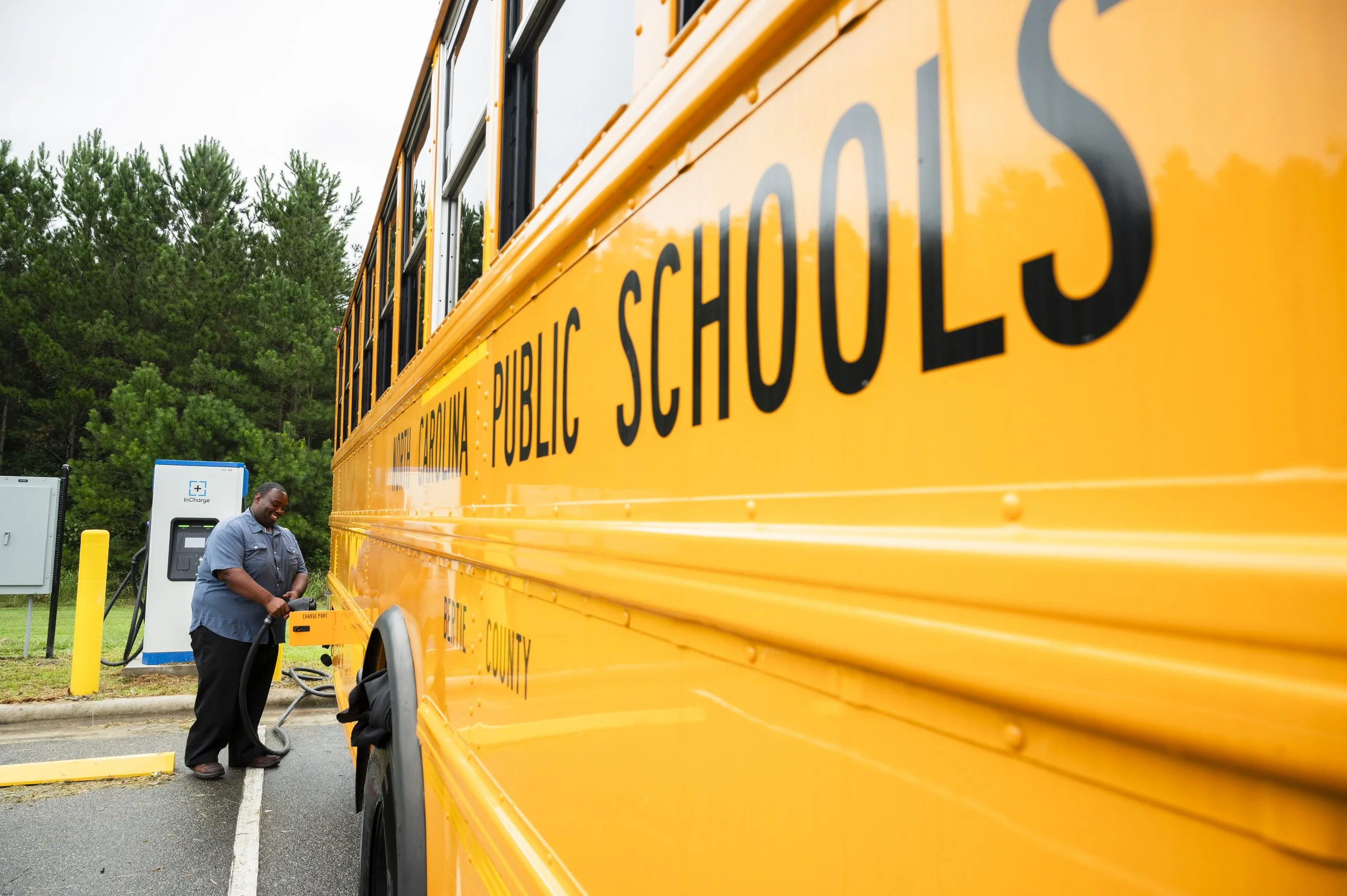
Transportation Director Terrance White charges Bertie County’s first electric school bus.
“At first, families were a little skeptical,” said Terrance White, transportation director for Bertie County Schools. “Now I get calls from parents asking if their child can ride the electric bus.”
For students who ride the electric bus every day, the benefits were immediately clear. “It was so clean inside and out,” one student said. “And it wasn’t loud like the buses with engines. It’s much quieter.”
“I had one student tell me she can sleep on the bus now because it’s so quiet,” Mr. White said. “I love it. Our drivers love it too.”
But the biggest difference is impossible to miss — or smell. On their regular diesel bus rides, exhaust fumes are a normal part of the experience. On the electric bus, that strong smell is gone. “It feels healthier,” another student shared.
The shift to electric school buses is improving air quality for riders, school staff, and the neighborhoods buses travel through each day. This change has meaningful health benefits for rural communities, where asthma and respiratory conditions are common, and many families struggle to access healthcare.
“This is about making sure our children are breathing cleaner air and growing up in a healthier environment,” said Angella Dunston, Roanoke’s public relations and engagement director. “Everyone cares about the kids in their community. And when a child has asthma or respiratory issues, cleaner energy isn't theoretical, it’s personal.”
Bertie County’s electric bus initiative is possible through a combination of federal investments and strong local partnerships. The district accessed funding through the Environmental Protection Agency’s Clean School Bus Program, which is investing $5 billion nationwide to transition school fleets to zero- and low-emission vehicles, alongside the National Electric Vehicle Infrastructure (NEVI) program, which supports charging infrastructure.
For recipients, these funds have been hard won. Shortly after taking office, the Trump administration attempted to end the NEVI program as part of a broader rollback of federal support for electric vehicle infrastructure. After months of legal challenges, the Federal Highway Administration determined the program could not be canceled and issued new guidance allowing funds to move forward.
The program is one of the only federal clean energy investments still in place, signaling the popularity and durability of these initiatives. Despite the administration’s ongoing attempts to undermine the electric vehicle transition, data from 2025 shows that electric vehicle infrastructure continues to expand nationwide. While much of that growth has been driven by private investment, federal programs remain essential rural districts like Bertie County that are frequently overlooked by other funding streams.
“I wish and hope this program continues to build,” said Mr. White. “We’re a small, rural county and electric transportation is a great benefit for us. The state is only going to give us so much funding, so programs like these are essential for us to keep moving forward.”
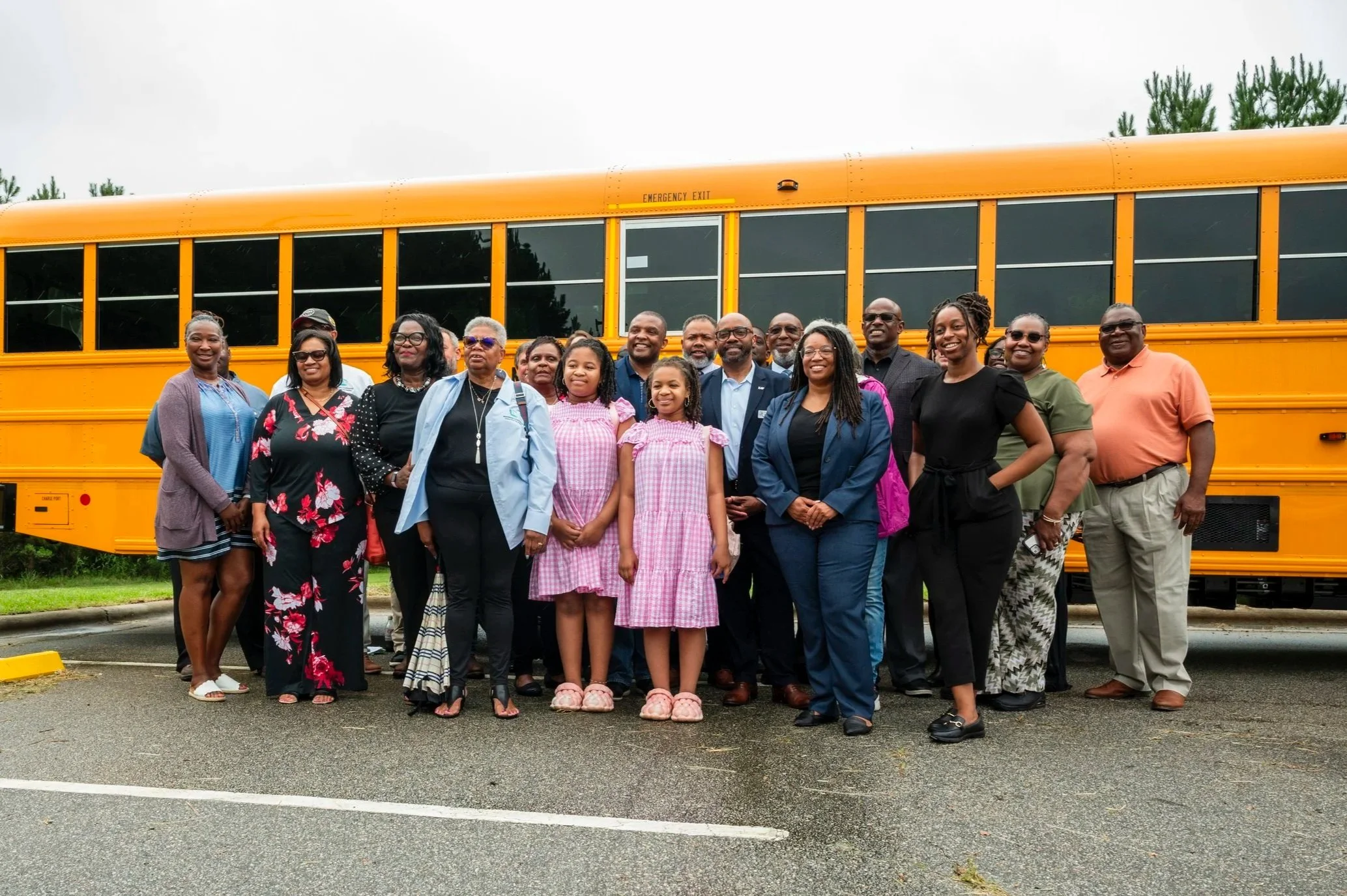
Community members gather with Roanoke and Hive Fund staff to celebrate the launch of Bertie County’s first electric school bus.
For Bertie County, the electric buses represent more than a transportation upgrade. The program also challenges longstanding assumptions about where innovation belongs.
“Too often, new ideas start in cities and maybe make their way to places like Bertie County years later, if at all. This time, we’re on the front end. We’re where it’s growing and taking shape,” Dunston said.
The electric school buses are influencing how students understand technology, innovation, and their own role in the transition to cleaner energy. In October, Roanoke’s annual Clean Energy Expo brought out hundreds of local students to explore interactive clean energy exhibits, including the electric school buses. These experiences help young people see how clean energy can connect directly to classroom learning and create meaningful career pathways close to home.
“Hive Fund’s support helps ensure rural communities like ours can lead the transition from dirty to clean energy,” said Dunston. “We’re showing the next generation that they don’t have to leave Bertie County or rural North Carolina to do something meaningful and groundbreaking. They can stay here and work on the challenges that matter to their own communities.”