
Hive Fund and Justice Climate Fund launch Tupelo Community Reserve to bring more clean energy projects to the South
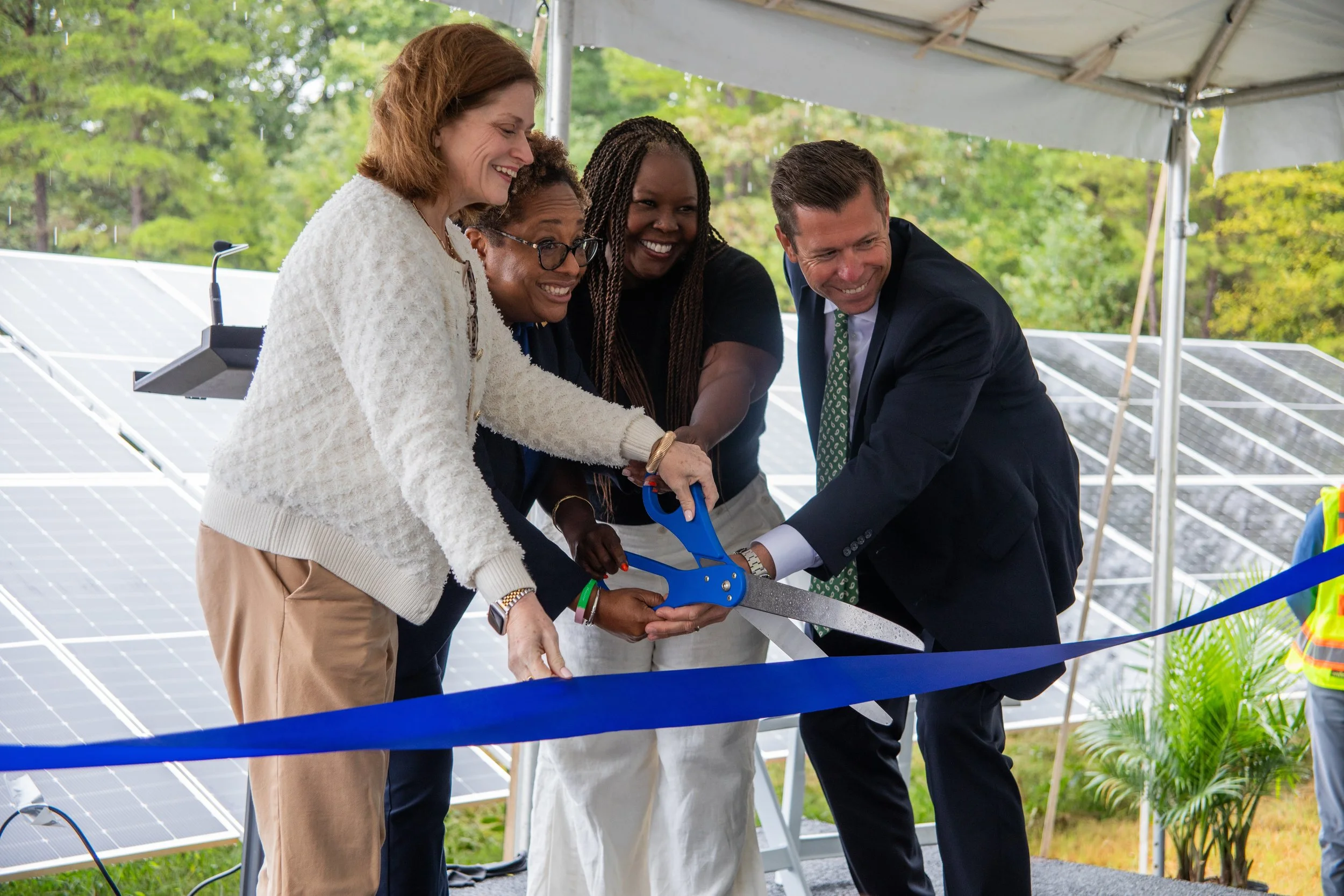
A ribbon cutting for McDowell Creek Solar Facility, which will power the local water and wastewater treatment plant in Huntersville, NC. Credit Christine Irvine, Survival Media
The promise of federal funding and tax credits helped accelerate the development of clean energy projects across the South that can bring lower energy bills, more reliable power, and good jobs to families and communities across the region.
When federal funds were clawed back, Hive Fund asked our partners what it would take to sustain the unprecedented momentum those investments had created. Because the savings these projects generate for households and communities are so significant, many of our partners told us that they could be financed upfront with loans and still pencil out.
In response, we moved Hive Fund’s first-ever capital investment, launching Tupelo Community Reserve in partnership with Justice Climate Fund.
Tupelo Community Reserve is a new credit enhancement vehicle that uses philanthropic dollars to unlock significantly larger amounts of private lending. The reserve will back loans made by community lenders, making it easier for them to finance projects communities are eager for, while giving lenders greater confidence to make loans in places and to partners they may not have traditionally served.
“Across the South, there is a strong pipeline of climate and clean energy projects ready for investment. We're honored to partner with Hive Fund to attract additional capital for projects that lower energy costs, build resilience to extreme weather, support cleaner air and water, and strengthen local economies.”
Amir Kirkwood, CEO, Justice Climate Fund
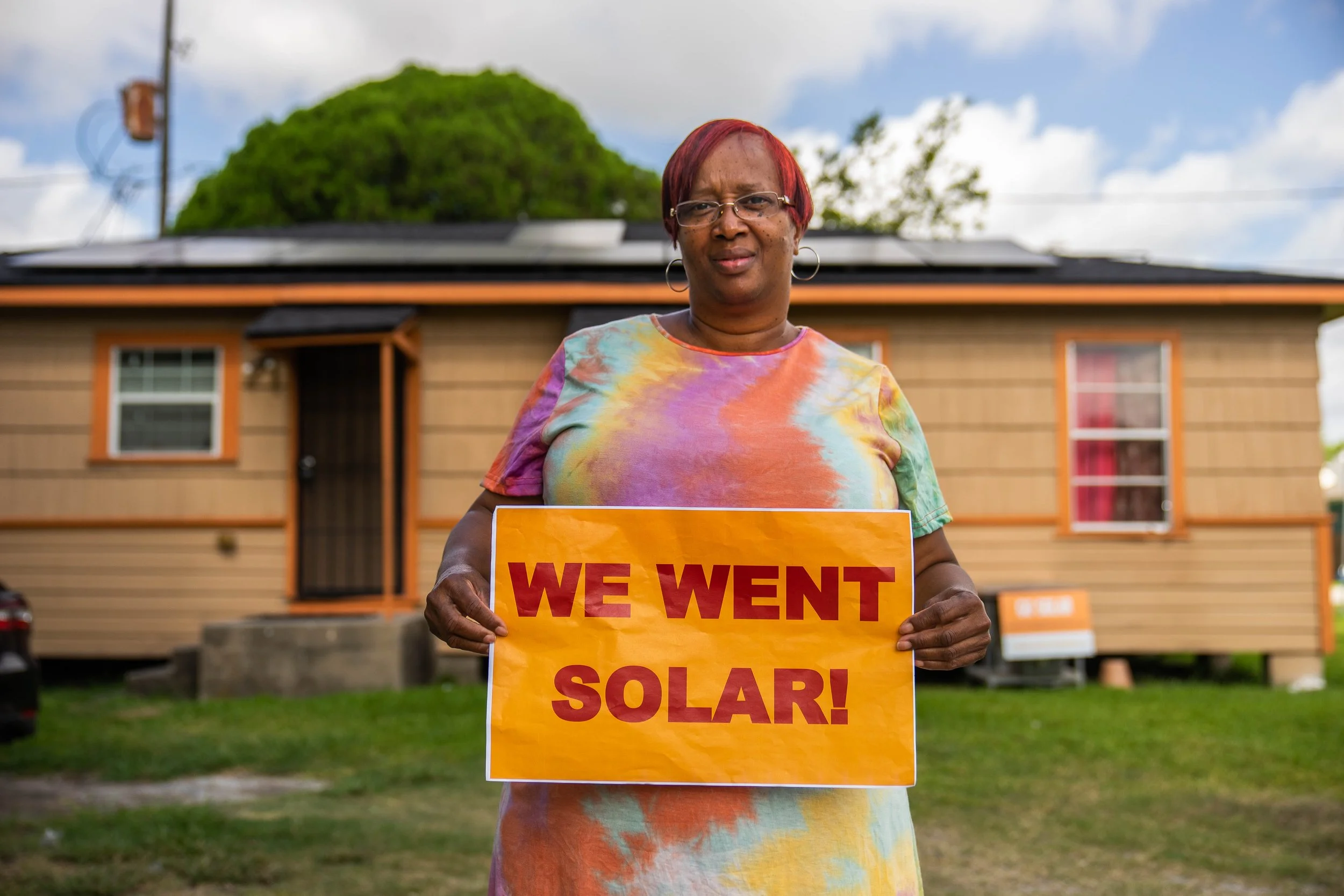
A participant in the hub homes program in Northeast Houston, which installs solar and batteries on low-income homes so they can serve as community refuges during outages.
Hive Fund and Justice Climate Fund have identified real, shovel-ready projects across the South that are facing a specific financing barrier the reserve is designed to address. These projects include:
Rooftop and community solar on municipal buildings, schools, hospitals, and underutilized land
Solar- and battery-powered resilience hubs in churches and other trusted community spaces for reliable power during outages
Solar generation that supports safe drinking water and reliable wastewater treatment
Energy efficiency upgrades that reduce energy bills for families and small businesses
Philanthropy has a vital role to play in accelerating clean energy investments, but grants alone can't provide the scale of capital these communities deserve. It takes far less philanthropic money to back a loan than to pay for a project outright, meaning Tupelo Community Reserve can help finance far more clean energy projects with every philanthropic dollar. Hive Fund and Justice Climate Fund are raising $10 million in reserve capital, which is expected to help unlock at least $65 million in lending by 2029.
“Since Hive Fund’s earliest days, I’ve watched our partners meet impossible moments with extraordinary creativity. Our job is to keep evolving alongside them, tapping into every tool philanthropy can bring to the table.”
Melanie Allen, CEO, Hive Fund for Climate and Gender Justice
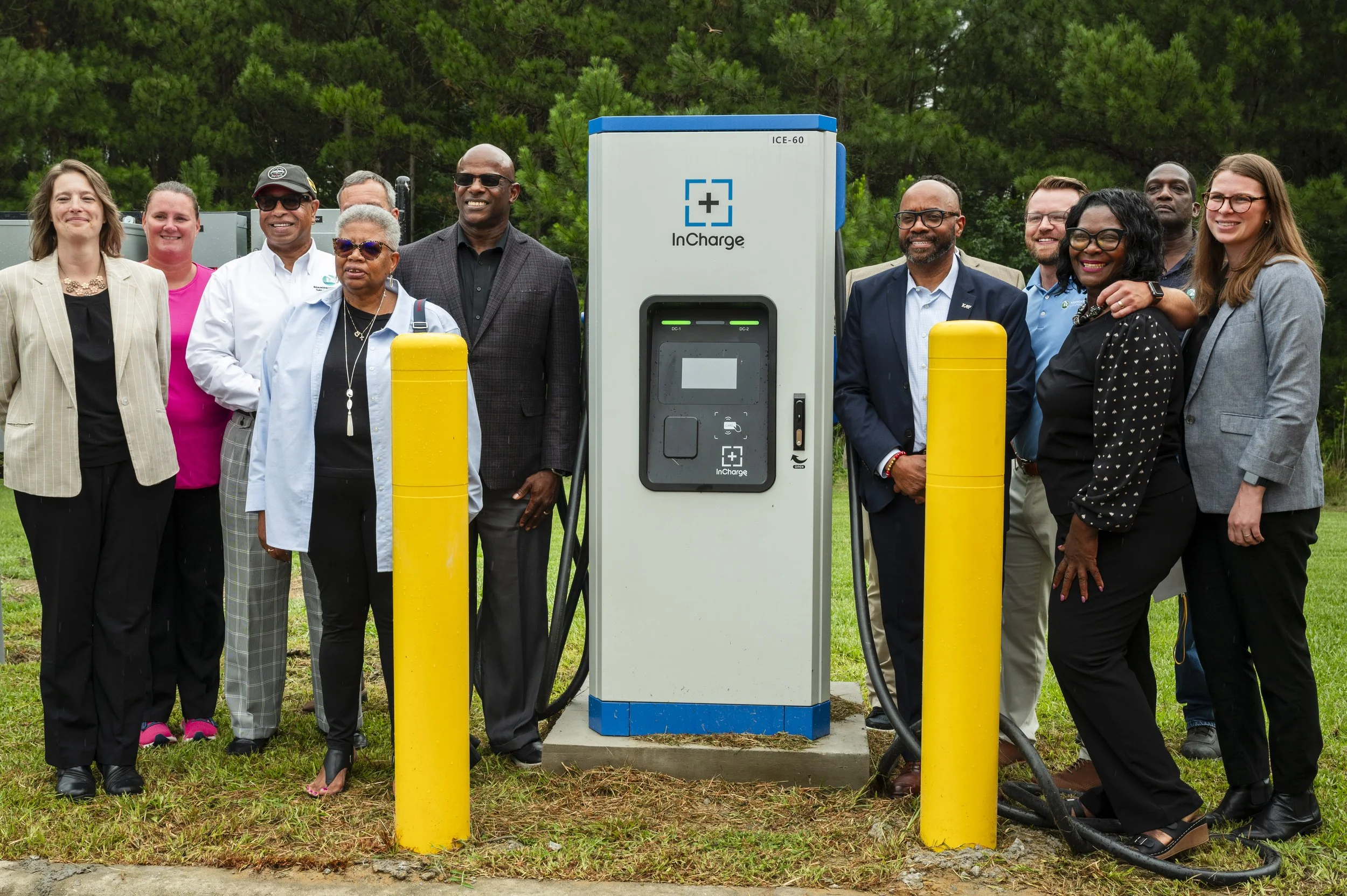
An EV charging station at Bertie County Schools in North Carolina, where the district has begun transitioning to electric school buses.
The name Tupelo Community Reserve was inspired by the tupelo tree, known to thrive under challenging conditions in the sandy and clay soils of wetlands across the South. Its roots spread wide underground and send up new shoots that grow into trees of their own, just as we hope each successful project funded by Tupelo Community Reserve will help create the conditions for many more.
Tupelo Community Reserve is being co-created with a group of community lenders, developers, and community organizations from across the South. These partners are helping shape the tool through their firsthand experience of what it takes to finance and build projects in their communities — a participatory design approach that’s rare in the investment space.
“We knew when we launched Tupelo Community Reserve that it had to be built alongside the real lenders and communities who will use it. Building it with people who know the barriers and what works on the ground means creating a tool they will trust and use.”
Vanessa Toro Barragan, Senior Program Officer, Hive Fund for Climate and Gender Justice
Across the South, community lenders are having to turn down clean energy projects, not because these projects aren't worthy of investment, but because lenders can't take them on alone. Philanthropy has an opportunity to play a catalytic role by reducing perceived risk for lenders, expanding the amount they can lend, and broadening the pool of capital available for clean energy. Tupelo Community Reserve offers a new way for funders to harness the full potential of philanthropic dollars and bring many more of these projects to life across the South.
For more information about investment opportunities, contact Strategic Partnerships Director Nandini Chaturvedula at nandini@hivefund.org.
About Hive Fund
Hive Fund raises money and makes grants to groups working to accelerate the transition from dirty to clean energy in ways that center justice, redistribute power, and create healthier, safer, and more prosperous communities. We focus our grantmaking in the US South — a region whose high pollution levels, abundant opportunities for clean energy expansion, and legacy of environmental justice leadership make it critical for global climate progress.
About Justice Climate Fund
Justice Climate Fund (JCF) is a national nonprofit mobilizing capital and resources to strengthen under-resourced communities across America. JCF drives transformative investments in climate and clean energy solutions that deliver energy independence, support cleaner air and water, create healthier communities, and build economic and environmental resilience. JCF’s national network includes more than 400 community lenders and state and local stakeholders across the country.