
How a Texas border community blocked a $160 million tax break for polluting energy
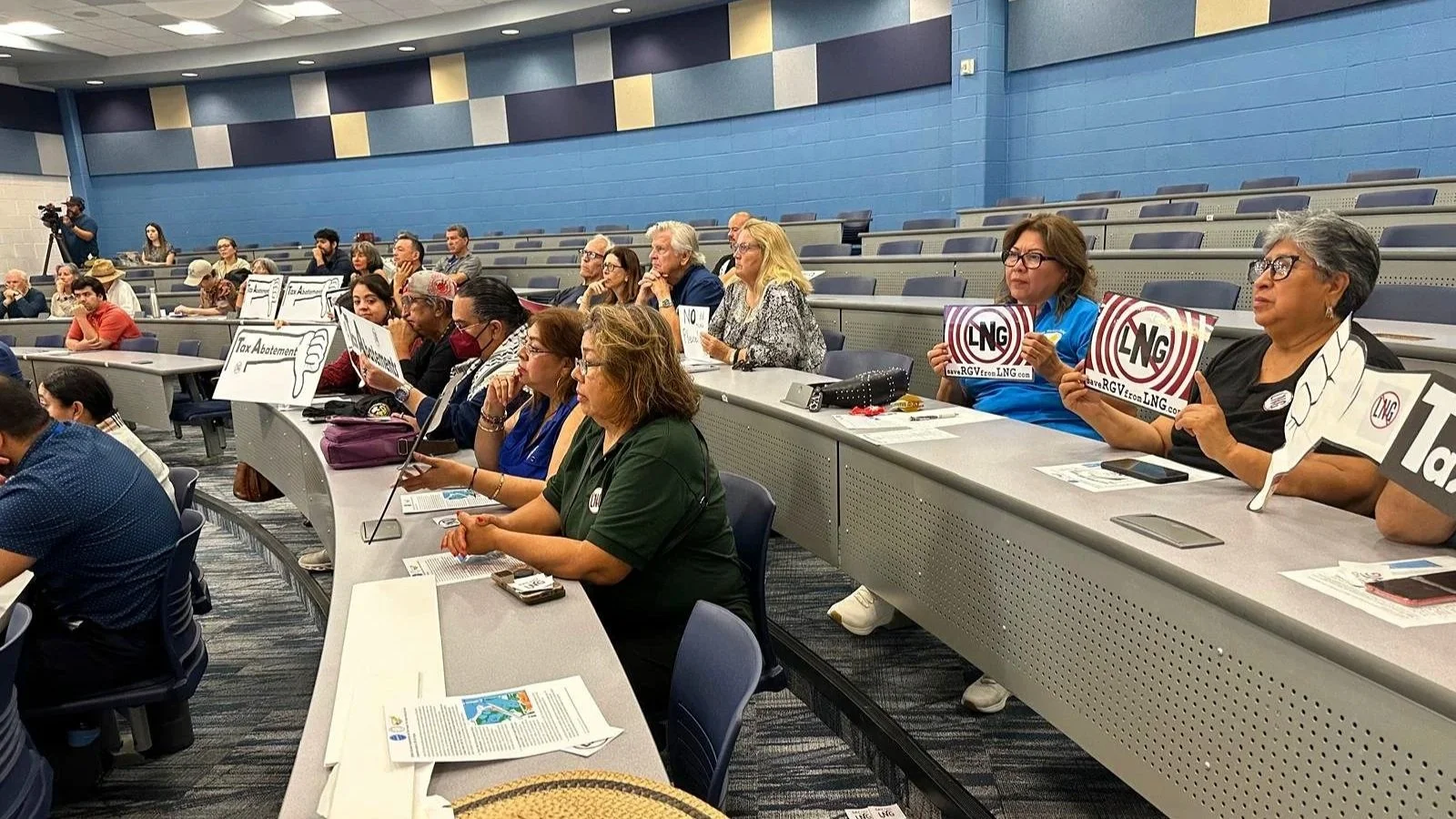
Local residents urged the Point Isabel Independent School District to reject the tax break for Texas LNG.
This article was written as part of our 2026 Impact Report.
For almost a decade, residents of Port Isabel, a coastal community at Texas' southernmost tip, have organized against attempts to turn the place they call home into an export hub for liquefied natural gas (LNG). Built for storing and shipping highly flammable gas, these facilities would worsen pollution, water scarcity, and other pressures facing communities across the Rio Grande Valley, a region that has become a hotspot for aggressive industrial buildout.
Just across the bay from Port Isabel, SpaceX fires rockets from its headquarters, polluting local water and blasting pulverized concrete into the community’s air. Meanwhile, tech companies are seeking permits for data centers in the area, despite a severe water crisis. Local residents and organizers have been raising alarms about the dangerous effects of these projects on local air and water, sacred Indigenous lands, and public health and safety, and building public pressure to prevent new facilities from moving forward.
Earlier this year, those community leaders helped secure a major victory when the Point Isabel Independent School District unanimously rejected a proposed $160 million tax break for Texas LNG — a significant financial setback for a project already struggling to secure the contracts and financing to move forward. Projects like these often rely on local tax breaks, effectively asking communities to subsidize industrial development that brings pollution and other harms to their neighborhoods.
The decision followed years of community outreach and organizing by local groups including South Texas Environmental Justice Network and Border Workers United, two grantee partner organizations supported by Hive Fund. Together, they canvassed and phone banked in impacted neighborhoods, mobilized residents to pack public hearings, and hand-delivered 140 letters opposing the subsidy.
“The LNG facility would be the biggest polluter in the entire region. That pollution would negatively impact school children who are still developing. We don’t want them to be exposed,” says Bekah Hinojosa, co-founder of the South Texas Environmental Justice Network. “The school district denied the tax break because they don't want this facility to ever be built.”
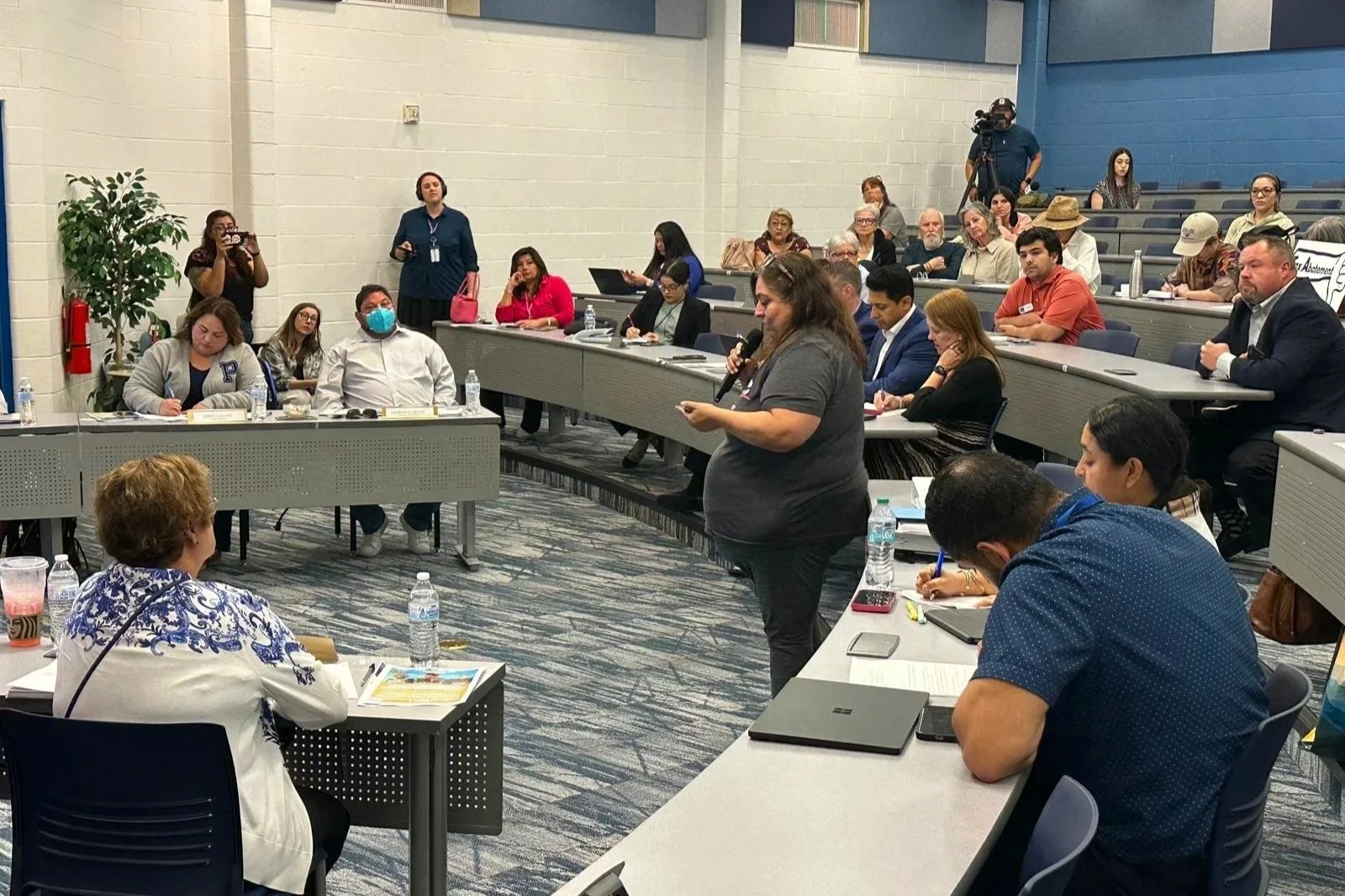
Port Isabel parents and residents testified at a school board meeting about how a tax break for Texas LNG would negatively impact their community.
"I'm very concerned because kids live and go to school here," said Veronica Mata, a community member involved in the campaign. "Our taxes should go to things that make us safer and healthier — free lunches in schools, recreation and parks — not things that harm us."
For Border Workers United and South Texas Environmental Justice Network, educating communities about the realities of these projects also meant countering the steady stream of news articles and TV ads that promised workers secure jobs with higher salaries. “The so-called jobs are temporary, and only for the construction period,” says Lupita Sanchez, executive director of Border Workers United. “After that, the facility basically runs by itself, with very few workers. It's more damage than benefit.”
With sustained, flexible funding from Hive Fund, Border Workers United doubled the number of organizers trained to do community outreach and bring working people into these campaigns. “Hive Fund was the first to provide multi-year grants to Border Workers United. This gave us the opportunity and the flexibility not just to build more power and organize, but also to be creative,” says Sanchez.
Hinojosa says long-term funding has also helped local groups build the coalition capacity that made this win possible. “This wasn't a spur-of-the-moment victory. Years of community outreach helped us successfully pressure the school district to make the right choice and reject this tax break,” she says. “Thanks to Hive Fund, we were able to hire staff, phone bankers, and Spanish interpreters, and to work in close coordination with partners like Border Workers United.”
Connecting Climate to People’s Everyday Lives
For community leaders like Sanchez and Hinojosa, stopping LNG expansion is inseparable from the broader work of building a safe and healthy Rio Grande Valley. “Our members are dealing with ICE raids and water militarization,” says Hinojosa. “We're trying to survive the high heat and hurricane seasons. We’re fighting the harmful impacts of the tech industry, the SpaceX rockets blowing up and crumbling our homes. People in the Rio Grande Valley are directly impacted by every issue. And that’s also how we have to approach our organizing.”
Most Port Isabel residents’ main priorities are putting food on the table, paying rent, and keeping each other safe during heightened aggression from immigration enforcement. Households have also seen a 30% increase in water rates in recent years. Organizers expect water and energy costs will continue rising if LNG facilities or data centers are approved by the city.
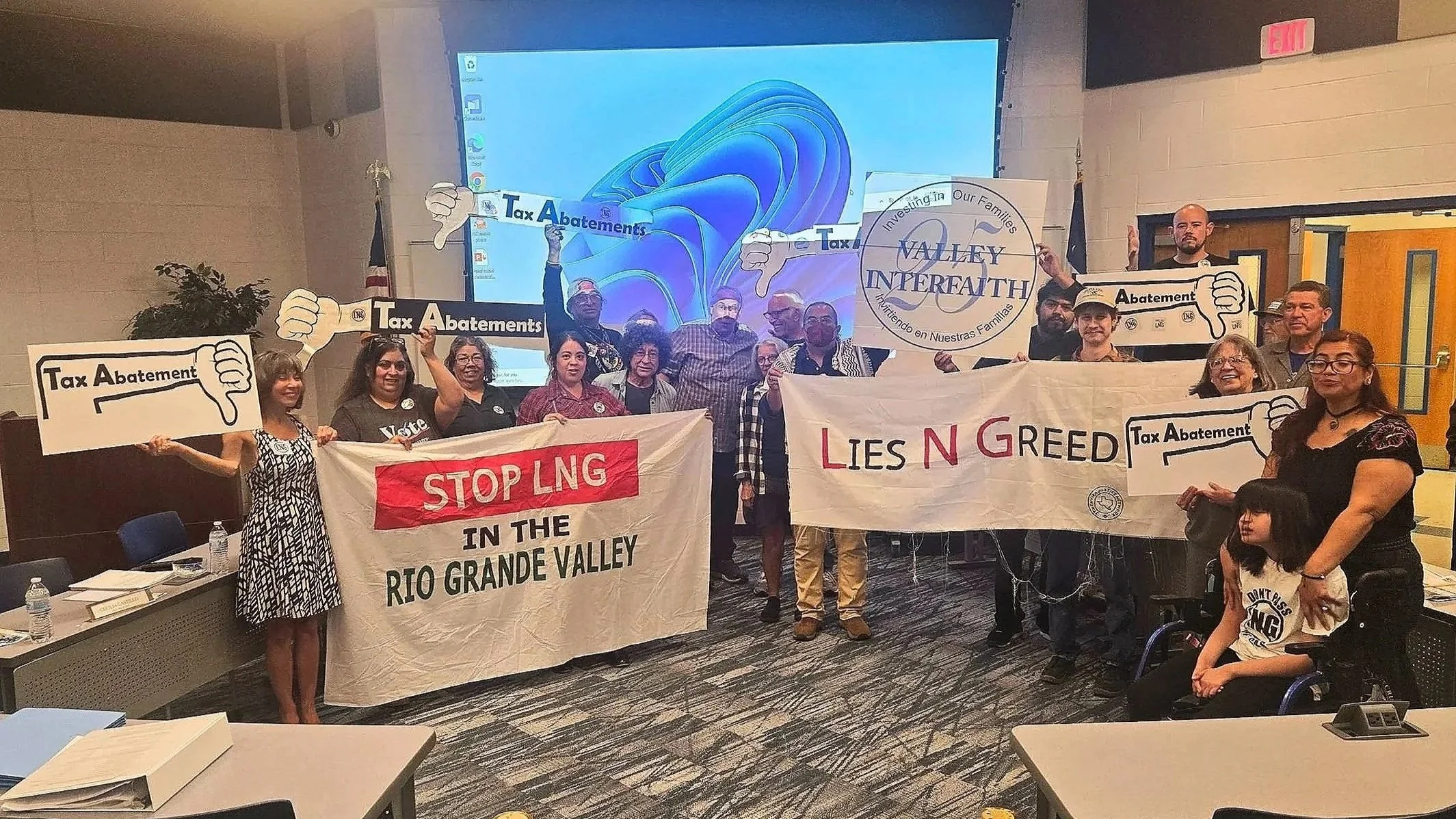
Community members celebrated the Point Isabel Independent School District’s decision to reject a $160 million tax break for Texas LNG. Credit: South Texas Environmental Justice Network.
In response, community leaders are connecting environmental concerns to the issues people are navigating every day. One way Border Workers United does that is through Lotería Climática, a bingo game they host during community events. The game teaches residents not only about the pollution and other harms caused by LNG facilities, but also the successful community organizing against them.
The game also shares practical information about climate solutions and how people can protect themselves in extreme heat, particularly for workers in the local construction, fishery, and restaurant industries. That community education is vital in the absence of any publicly-funded health campaigns on the deadly stakes of heat strokes and heat exhaustion.
“The government is not educating people, so we have to,” says Sanchez.
Sanchez connects this to the fact that when polluting industries get tax breaks, that leaves fewer public resources for local communities who are living with the consequences of their environmental harms. She says local groups are increasingly being asked to fill the gaps left by government, particularly as communities face more frequent and severe disasters.
“Storms that would happen every 10 years are now happening every three years,” says Sanchez. “The last time we had a storm, people lost their mobile homes. We also lost the life of one of our members.” When FEMA did not declare the damage severe enough to warrant federal assistance, local government officials said they expected nonprofits like Border Workers United to fund and lead recovery efforts. In response, the group has been pressuring city officials to allocate resources for disaster preparedness and response.
Applying Pressure on All Fronts
Now, as Texas LNG and other harmful projects continue to seek the financing and regulatory approvals needed to move forward, local groups are pursuing litigation against state permits while using every tool at their disposal to stop or slow dirty energy expansion in the Rio Grande Valley.
For Hinojosa, connecting with other communities impacted by fossil fuel buildout is a key strategy to combat the power of these extractive industries. With polluting infrastructure being pushed heavily across the Gulf Coast, a setback for one project can represent a holdback on the larger industry.
“The gas for this LNG facility would come from other parts of Texas. That means more pipeline networks that release toxic pollution and put people at the risk of pipeline explosion all along their routes,” says Hinojosa. “The fossil fuel industry wants to build out, so we have to do the same thing in order to fight back. We have to connect with other communities and push back against the big polluters collectively.”
Groups are also educating potential financiers and insurers about the risks associated with these projects. “We don't leave it up to the regulatory agencies to decide our fate,” says Hinojosa. “We put pressure on every bad actor involved with these LNG facilities to drop their support. We meet with banks, talk to private equity, urge shareholders to stop funding these projects, and urge other countries to stop signing contracts with LNG facilities so that they can't export their gas.”
Their strategy reflects the South’s long experience advancing progress under challenging conditions, offering lessons for communities elsewhere as federal climate protections weaken. With polluting projects being fast-tracked through permitting, organized communities are finding other creative openings to slow or stop dirty energy expansion.
“It’s always been this way for Texas, since it’s a fossil fuel state,” says Hinojosa. “These challenges aren’t new for us.”
Building People Power for the Long Haul
In the face of a hostile landscape, groups in South Texas are finding ways to sustain momentum by keeping people connected to one another and to the places they call home. “We have been able to succeed. We keep mobilizing people. We're not going to wait four years and not do anything,” shares Sanchez.
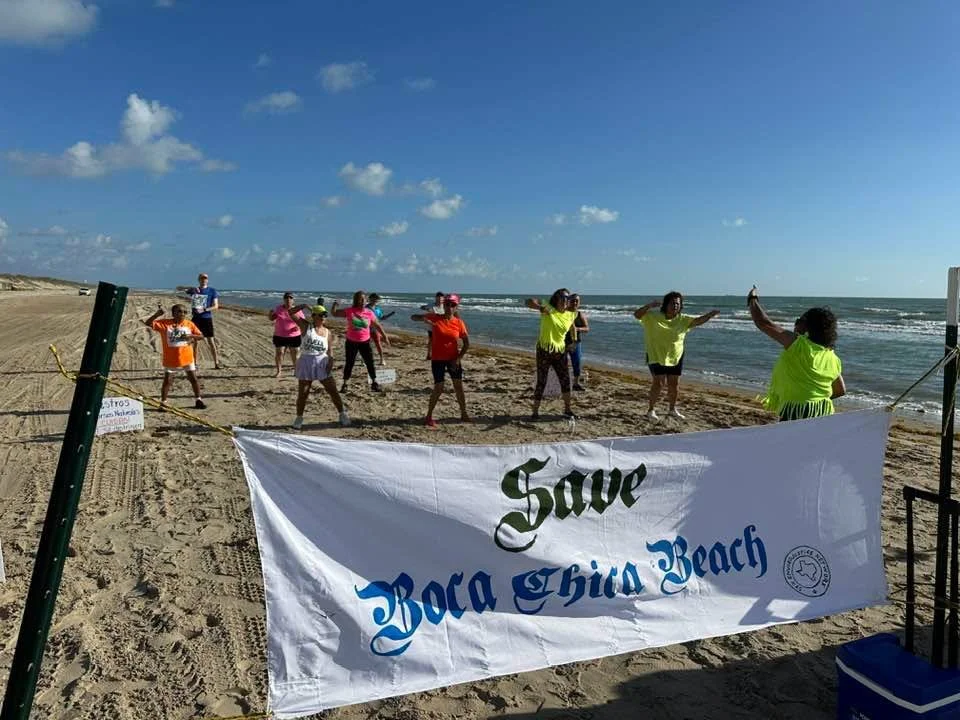
A community dance class at Boca Chica Beach, which has been targeted by aggressive industrial buildout including an existing SpaceX launch site.
That includes creating space for people to come together around culture, art, and joy while also learning about the environmental fights ahead. Border Workers United and South Texas Environmental Justice Network host community events, including concerts and dance classes at Boca Chica Beach, one potential site eyed by the LNG industry.
“Every time, creativity is requesting something more, something different,” says Sanchez. “We’re keeping the community engaged, so that when the time comes, we can move forward on what’s better for everyone, not just the few.”