
Black Churches in Georgia Are Using Solar to Create Climate Refuges and Save on Their Energy Bills
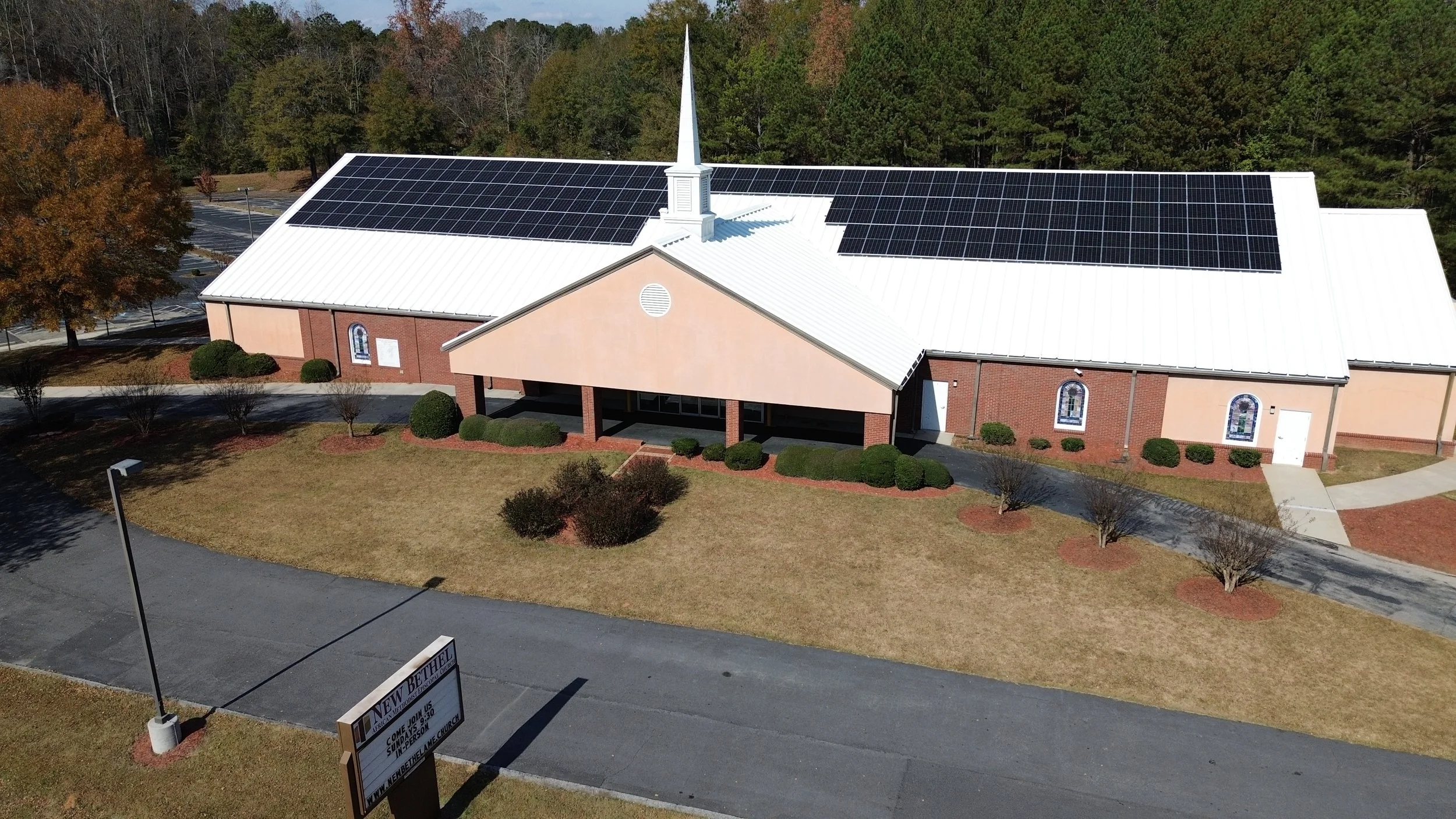
New Bethel AME Church in Lithonia, Georgia, is the first of 18 congregations to become a community resilience hub with solar, batteries, and EV charging. Credit: Better Tomorrow Solar.
This article was written as part of our 2026 Impact Report.
When Hurricane Helene hit the Southeast in September 2024, it knocked out power for more than a million people across Georgia, with outages stretching hundreds of miles inland from the coast. Georgia’s state utility claims it restored power to most customers within 48 hours. But when the African Methodist Episcopal (AME) Church — one of the largest predominantly Black denominations in the US — checked in with its congregations in the hurricane’s aftermath, it found that one of its churches in South Georgia was without power for 19 days, along with the community that surrounded it.
That reality was part of what led AME Church to launch Freedom Power Hubs, an initiative to build solar energy systems at churches across Georgia so they can operate as centers of refuge during disasters — both for the surrounding community and for people evacuating from further south. The initiative is led by the Sixth District AME Church, which encompasses all AME congregations across the state. Each hub includes solar panels, battery storage, and chargers for electric vehicles.
In a disaster like Hurricane Helene, a Freedom Power Hub would be a place for people to shelter, charge phones, find clean water, refrigerate life-saving medicines, and stay in touch with loved ones. It could also serve as a staging center for disaster response organizations like the American Red Cross to distribute food, supplies, and medical services.
Testing the Model in Georgia
When AME Church was considering where to pilot the initiative, Georgia stood out as a strategic choice. With two major hurricane corridors, the state faces high risk of power outages during storms while also being a destination for people evacuating from Florida and other Gulf Coast states.
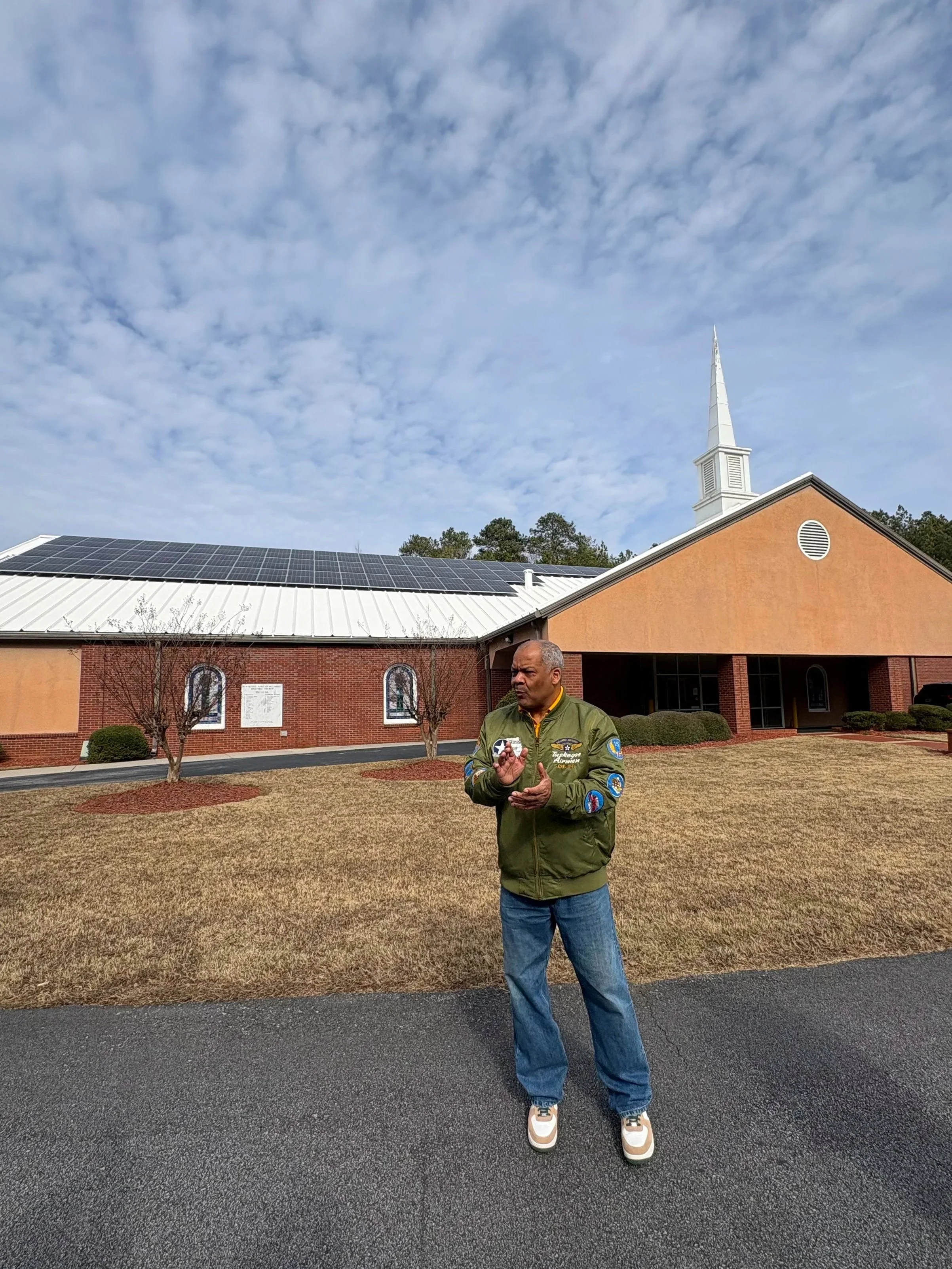
James Gaymon, director of operations for social justice for the Sixth District AME Church, gives a tour of the new clean energy resilience hub at New Bethel AME Church.
New Bethel AME Church, located east of Atlanta in Lithonia, is the first completed Freedom Power Hub. “Becoming a resiliency hub means helping our congregation understand that caring for people extends beyond Sunday morning," says Rev. Dr. William E. Thomas Jr., senior pastor for New Bethel AME Church. “It means preparing our church to be a place of refuge, strength, and essential support during emergencies while building a healthier and more sustainable community every day.”
New Bethel was chosen as the first hub in part because of its strong network of community relationships. In the early days of the COVID-19 pandemic, those relationships enabled the church to rapidly distribute food donations to its members, local schools, and the broader community, even without the specialized resources of an official emergency supply center.
“Congregations, both physically and spiritually, serve as resiliency hubs already. That was my experience of growing up in middle Georgia,” says Codi Norred, executive director of Georgia Interfaith Power & Light, the Sixth District’s partner in the initiative. “When there was a disaster or a storm, it was congregations and people associated with those congregations who would be the first people doing that work: feeding people, helping to cut trees and clear roadways, finding aid for people who needed it, providing shelter.”
Energy Savings That Add Up
Even outside times of crisis, New Bethel AME Church’s clean energy system delivers benefits to the church every day, including financial resilience. The resilience hub covers roughly 80% of the church's energy needs and is expected to save them more than $15,000 a year. New Bethel already saved $1,200 on its first electric bill under this new clean energy system, despite the bill being for the hottest July on record.
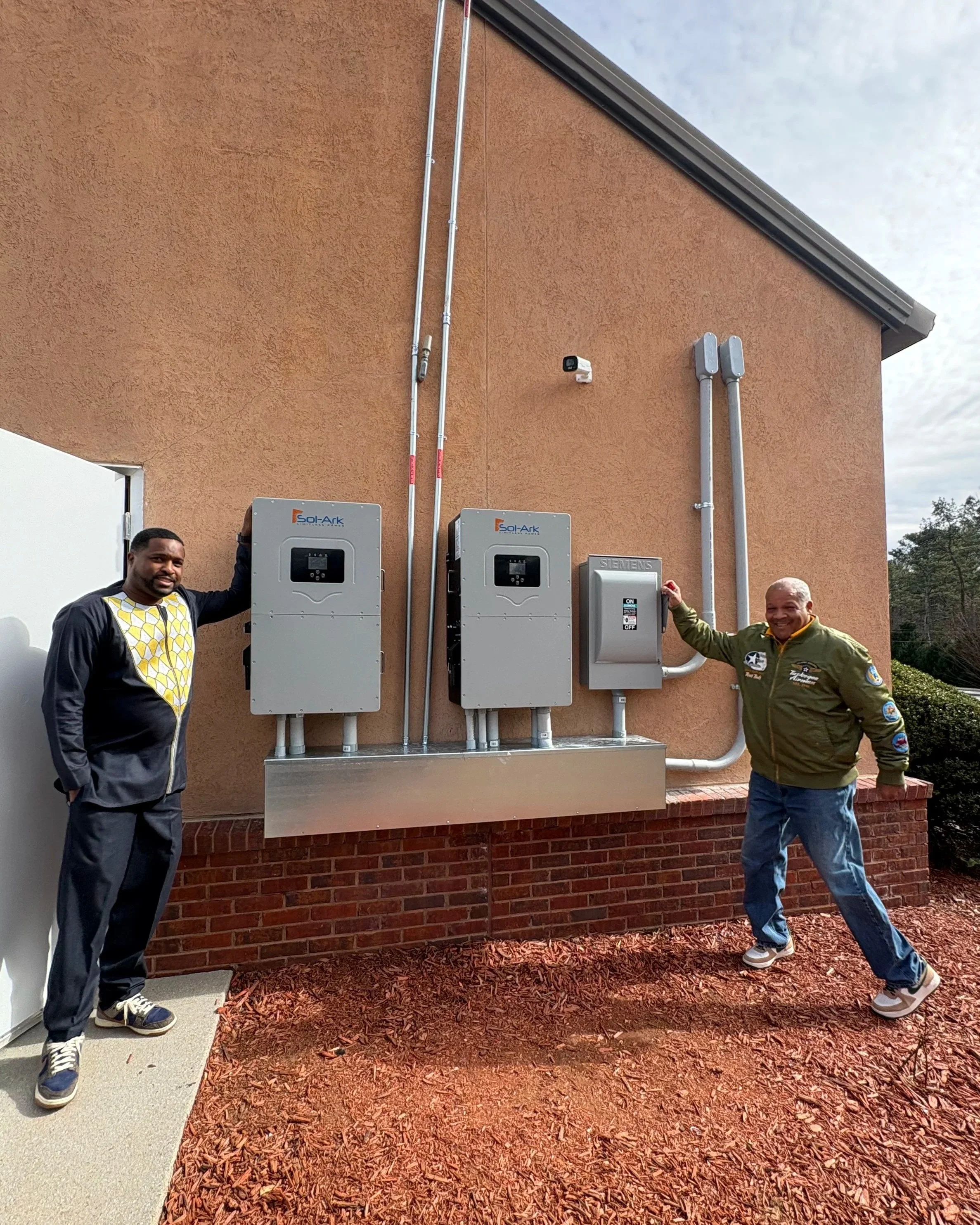
Rev. Dr. William E. Thomas Jr. (left) and James Gaymon (right) with New Bethel AME Church’s solar battery storage system.
This successful model is being replicated at 18 AME Church congregations across Georgia, with six churches now only waiting on financing to break ground. In the meantime, Hive Fund’s support has enabled the Sixth District to provide professional energy assessments for the 12 other participating churches, identifying ways they can reduce energy costs and prepare for outages even before solar panels are installed. At some churches, for example, up to 40% of energy costs go toward parking lot lighting, so relatively small investments in motion sensors and energy-efficient bulbs can deliver immediate savings while reducing energy use and associated carbon emissions.
The Sixth District expects even more churches will want to join the initiative once they see how much New Bethel has saved on energy over the first year. “The savings matter,” says Bishop Michael L. Mitchell of the Sixth District AME Church. “Every dollar a congregation no longer has to spend on excessive energy costs is a dollar that can be redirected toward ministry — feeding families, supporting young people, helping seniors, strengthening our outreach, maintaining our churches, and serving our communities.”
And when clean energy delivers tangible benefits through trusted institutions like churches, it helps build broad public support for clean energy in communities that have long been left out. “In our history, very rarely were [Black churches and Black communities] given the opportunity to get in in the beginning, and I feel that we're doing that now — embracing the technology before it hits mainstream,” says James Gaymon, director of operations for social justice for the Sixth District AME Church.
Powering the Pivot
Both the Sixth District and Georgia Interfaith Power & Light planned to fund upcoming projects through Solar for All, a $7 billion federal program meant to give low-income communities access to affordable, resilient, and clean solar energy. But when the federal administration illegally canceled Solar for All funding and clawed back tax credits for community and residential solar projects, many organizations ready to break ground were suddenly left without the money to follow through on years of planning. Particularly hard hit were states like Georgia, which have fewer state-level incentives for community centers like churches to recuperate the cost of installing solar energy systems.
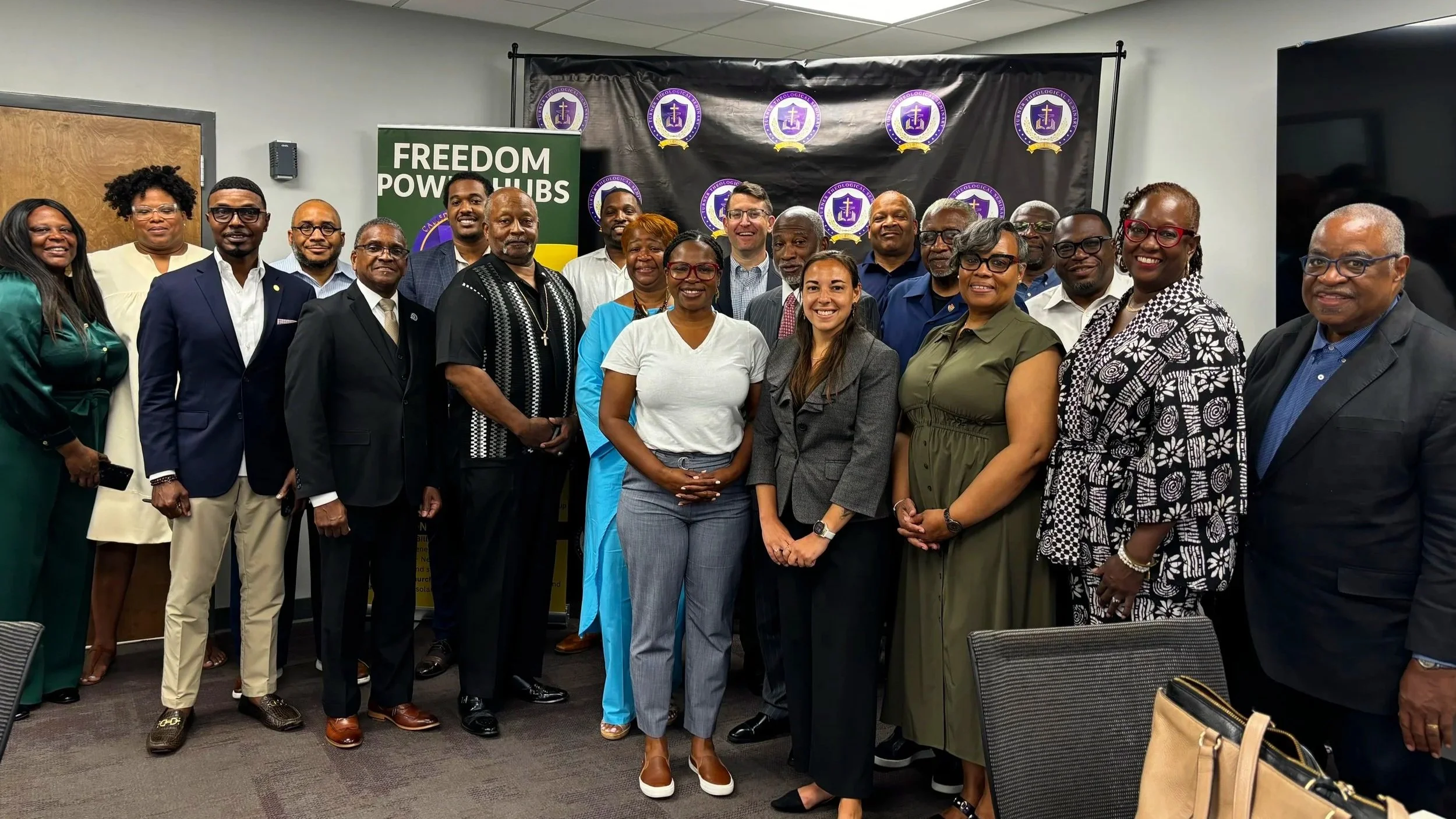
Sixth District AME Church and Georgia Interfaith Power & Light (GIPL) celebrate the launch of the Freedom Power Hubs initiative.
Hive Fund worked with our partners to figure out what it would take to sustain the unprecedented momentum those investments had created. We immediately moved flexible, multiyear support to the Sixth District AME Church and Georgia Interfaith Power & Light so they could keep the vision behind Freedom Power Hubs moving while pursuing new sources of financing. With this support, Gaymon was able to keep the first resilience hub on track to finish installation by the beginning of 2026. “I would not have been able to do that if not for the additional capacity Hive Fund’s grant allowed us to have.”
Now, Freedom Power Hubs and similar projects across the South are exploring private financing as one pathway to scale. The energy savings these projects generate can help make loan payments pencil out over time, but many community projects struggle to get approved for affordable financing. To help close that gap, Hive Fund launched Tupelo Community Reserve in partnership with Justice Climate Fund, a tool that backs loans from community lenders so more projects like the Freedom Power Hubs get built and demonstrate the value of investing in community-driven clean energy across the South.
Building Toward Scale
Getting more churches materially prepared means that the Sixth District will be ahead of the game if and when more options open for financing clean energy at the state and federal level. “As we build these hubs, as we test the model, in everything we do, we make sure there's a procedure that can scale it,” shares Gaymon. “With flexible, long-term support from Hive Fund, I can focus on strategic growth.” He’s begun coordinating with the Conference of National Black Churches, laying the groundwork for projects like Freedom Power Hubs across other national church networks.
By proving out this successful model now, the Sixth District AME Church is creating a blueprint for communities to develop their own resilience hubs at scale. “We're more resilient when hundreds and hundreds and thousands of communities all do small projects. We're less resilient when we're dependent on, say, one power plant, one nuclear plant, one gas pipeline,” says Norred. “It makes us really resilient when everybody in their community has a place that they can point to that says, that place is going to help us in a disaster.”